Paper Box Material Guide
Paper Box Materials, Printing and Finishing Options
Compare paperboard, lamination, printing and finishing options for your packaging project. Use this guide to prepare specifications for cosmetic boxes, gift boxes, folding cartons, corrugated boxes and rigid packaging.
1. Material Introduction
Choose the paperboard by product weight, box structure and brand positioning.
Quick answer for buyers
Common choices include SBS or FBB for retail cartons, wrapped greyboard for presentation boxes, and corrugated board for mailers. Select the board using product weight, box dimensions, packing method and handling conditions, rather than thickness alone.
View the illustrated comparison
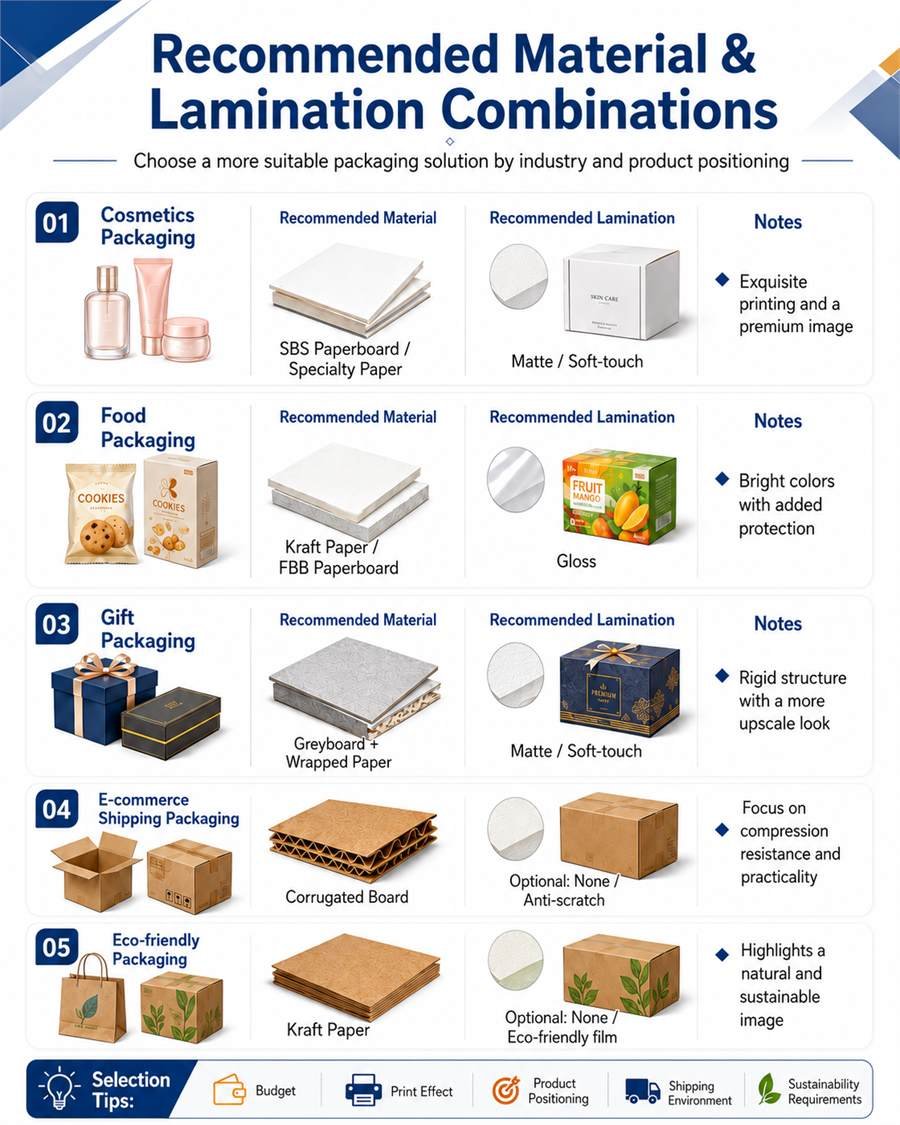
Smooth white surface, clean color printing and a premium look. Good for cosmetic boxes, skincare cartons, medicine boxes and small retail paper boxes.
- Confirm the board grade, grammage, thickness and print surface; grammage and thickness are different measurements.
- Often matched with matte, gloss or soft-touch film.
A multilayer paperboard used for folding cartons and retail packaging. Compare board grade, stiffness and print surface for your product.
- Good balance of price and print result.
- Suitable for lightweight product boxes.
Thick rigid board used inside premium gift boxes, drawer boxes, lid and base boxes and book shape boxes. It is normally wrapped with printed paper or specialty paper.
- Best for premium presentation and stronger structure.
- Confirm greyboard thickness, wrapping paper and lid or tray fit with the packed product.
Brown or white kraft paper gives packaging a simple, natural appearance. Common applications include retail packaging, food boxes and mailers.
- Best for a natural look and minimal printed designs.
- On brown kraft, printed colors generally appear more muted than on white paperboard.
Made with liner and fluted medium for cushioning and compression resistance. Used for mailer boxes, ecommerce shipping boxes and heavier products.
- Confirm flute profile, board specification, packed weight and shipping conditions; flute type alone does not establish protection.
- Can be printed directly or laminated with printed paper.
Textured, pearlescent, metallic or dyed paper used to create a premium surface without heavy printing. Common for perfume boxes, jewelry boxes and gift packaging.
- Best when texture and touch matter.
- Often combined with foil stamping or embossing.
2. Lamination
Lamination protects the printed surface and changes how the box feels in hand.
For custom printed paper boxes, lamination is not only decoration. It helps protect ink, improve scratch resistance, control gloss level and create a better unboxing impression. The best choice depends on whether the brand wants bright shelf impact, quiet premium texture or practical protection.
View the illustrated comparison
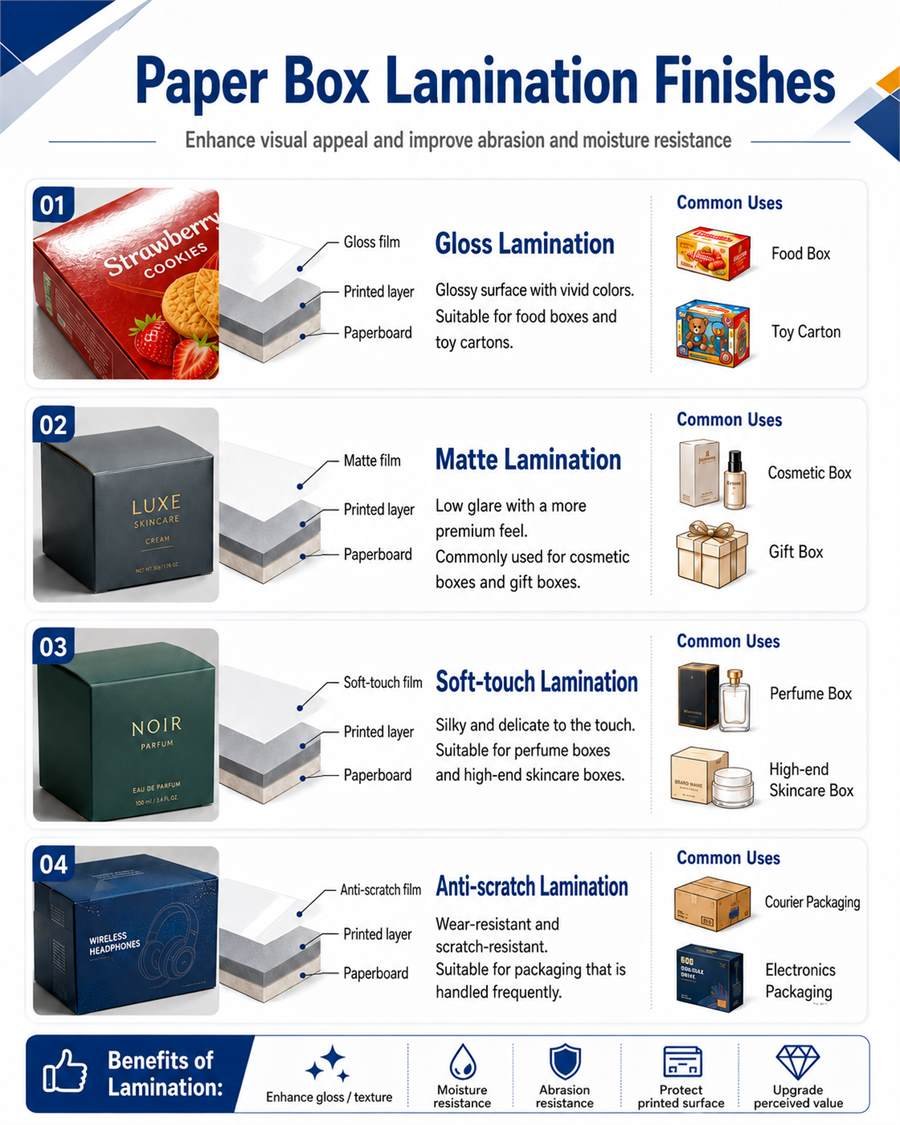
Creates a shiny surface with stronger color saturation and visible reflections. Good for food boxes, toy cartons, promotional cartons and retail boxes that need bright shelf impact.
- Choose it when color brightness matters.
- Compare gloss, touch and scuff resistance on the intended printed surface.
Reduces glare for a subtle, understated finish. Common uses include cosmetic boxes, perfume boxes and gift packaging.
- Good base finish for premium packaging.
- Pairs well with foil stamping and spot UV.
Feels smooth and delicate, with a more luxurious hand feel than standard matte film. Often used for high-end skincare boxes, fragrance boxes and rigid gift boxes.
- Best for products where touch affects perceived value.
- Needs careful handling to avoid fingerprints.
Adds better wear resistance for dark packaging or boxes handled frequently. Useful for black cosmetic boxes, electronics packaging and premium retail boxes.
- Best for dark ink coverage.
- Useful when shipping or handling marks are a concern.
3. Printing Introduction
The printing method affects color accuracy, logo consistency and the appearance of the finished box.
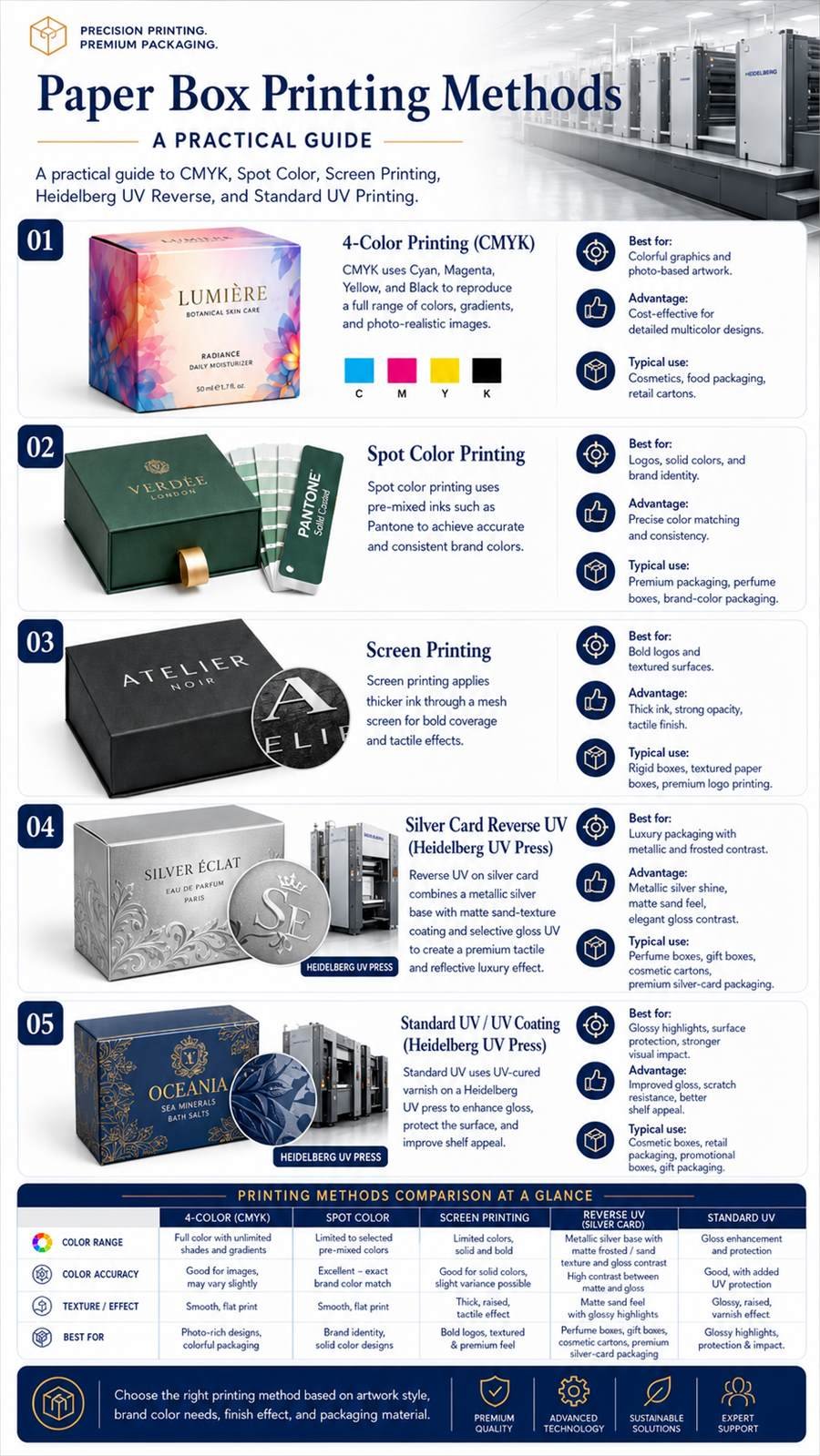
CMYK printing reproduces full-color artwork. Spot inks can help control specified brand colors; paper and finishes also affect the result. Screen printing deposits ink, while UV coating is a surface finish. Agree on a physical color reference and proofing method before production.
View the illustrated comparison
01 CMYK Printing
CMYK uses cyan, magenta, yellow and black ink to reproduce full-color artwork, gradients and photo-style graphics. It is the most common choice for custom folding carton boxes and printed paper packaging.
Best for: colorful product boxes, cosmetic cartons, food boxes and retail packaging.02 Spot Color Printing
Spot color uses pre-mixed ink such as Pantone colors. It helps keep brand colors more stable across batches, especially for logos, solid backgrounds and identity-driven packaging.
Best for: logo color consistency, premium brand packaging and solid color designs.03 Screen Printing
Screen printing applies thicker ink through a mesh screen. It is used for bold designs on textured or dark paper and for areas that need greater ink coverage.
Best for: bold logos, textured paper and premium logo printing.04 UV Coating / Reverse UV
UV coatings can add gloss across a surface or in selected areas. Raised tactile effects require a specific process and should be requested separately. Reverse UV creates contrasting surface effects; confirm the result on a suitable sample.
Best for: glossy highlights, luxury contrast and stronger visual focus.4. Special Finishes
Hot foil, embossing, debossing and spot UV make the brand detail easier to notice.
Special finishes should be used with purpose. One strong finish on the logo, pattern or key message is often more premium than using many effects at once. Below are the finishes buyers ask about most often.

Hot Foil Stamping
Hot foil stamping transfers metallic foil onto the paper surface with heat and pressure. Gold foil, silver foil and colored foil are common for premium logos and luxury gift boxes.
- Best for
- Logos, borders, icons and small luxury details.
- Note
- Works best on clean vector artwork, not very thin photo details.

Embossing
Embossing raises part of the paper surface to create a tactile 3D effect. It is suitable for brand names, monograms, patterns and premium cosmetic or gift packaging.
- Best for
- Raised logo effects and tactile premium surfaces.
- Note
- Needs enough paper thickness and clear artwork edges.

Debossing
Debossing presses the design into the paper surface. It is quieter than foil stamping and works well for minimal premium packaging, textured paper and elegant gift boxes.
- Best for
- Subtle logos, minimalist brands and specialty paper.
- Note
- The effect is more refined but less eye-catching than foil.

Spot UV
Spot UV adds gloss to selected areas, such as logos or patterns. It does not automatically create a raised texture. Specify any raised tactile effect separately and confirm compatibility with the paper and base finish.
- Best for
- Gloss logo highlights, tone-on-tone effects and black packaging.
- Note
- Requires accurate registration between printing and UV position.

Blind Embossing
Blind embossing creates a raised logo without ink or foil. The effect relies on shadow and paper texture for a subtle finish on rigid boxes.
- Best for
- Luxury minimal design and textured dark paper.
- Note
- Use simple shapes so the detail remains visible.

How to Combine Finishes
For most custom paper boxes, choose one base finish first, then add one highlight finish. For example: matte lamination plus gold foil, soft-touch film plus embossing, or matte film plus spot UV.
- Best for
- Balanced premium packaging without over-decoration.
- Note
- Too many finishes can raise cost and make the design look busy.
Buyer Questions
Common questions before choosing paper box materials and finishes.
Compare material, printing and finishing options before requesting a sample.
What material is best for cosmetic boxes?
SBS paperboard is a common choice for cosmetic folding cartons because it has a smooth white surface and good print quality. For premium cosmetic gift boxes, greyboard wrapped with printed paper or specialty paper gives a stronger rigid structure.
Should I choose matte or gloss lamination?
Gloss emphasizes reflections and printed color; matte reduces glare. Soft-touch adds a different tactile feel. Compare samples on the intended paper and artwork, including handling marks and scuff resistance, before selecting a finish.
What is the difference between embossing and debossing?
Embossing raises the logo or pattern above the paper surface. Debossing presses it into the surface. Embossing is more tactile and visible, while debossing is more subtle and minimal.
When should I use spot UV?
Use spot UV when you want a glossy highlight on a matte surface, such as a black logo on a matte black box or a glossy pattern over a soft background. It is best for selected details, not the whole box.
What information should I send for a material recommendation?
Send the box type, product size and weight, order quantity, target price level, reference photo, artwork if available and whether you prefer natural, retail, premium or luxury packaging. Wzpackage can then recommend paperboard, lamination, printing and finishing options.
Need help choosing the right material and finish?
Share your box style, dimensions, quantity, product photo and preferred look. Wzpackage can suggest material, printing and finishing options for your sample.